Catania is a city you can walk. Almost everything worth seeing in the old town sits within a short stroll of Piazza Duomo, and the streets themselves are half the point: dark lava stone, pale Baroque façades, balconies on carved brackets, and Etna somewhere behind it all.
Much of what you see was rebuilt after the earthquake of 1693, and the city’s late Baroque centre is part of the UNESCO-listed Late Baroque Towns of the Val di Noto. Two days is enough to see the best of it without rushing. Here is how we would spend them.
Day one, morning: Via Crociferi
Start on Via Crociferi, the most beautiful street in Catania and, for our guests at Sikelia Palace, the street outside the front door. Sikelia Palace is at number 30.
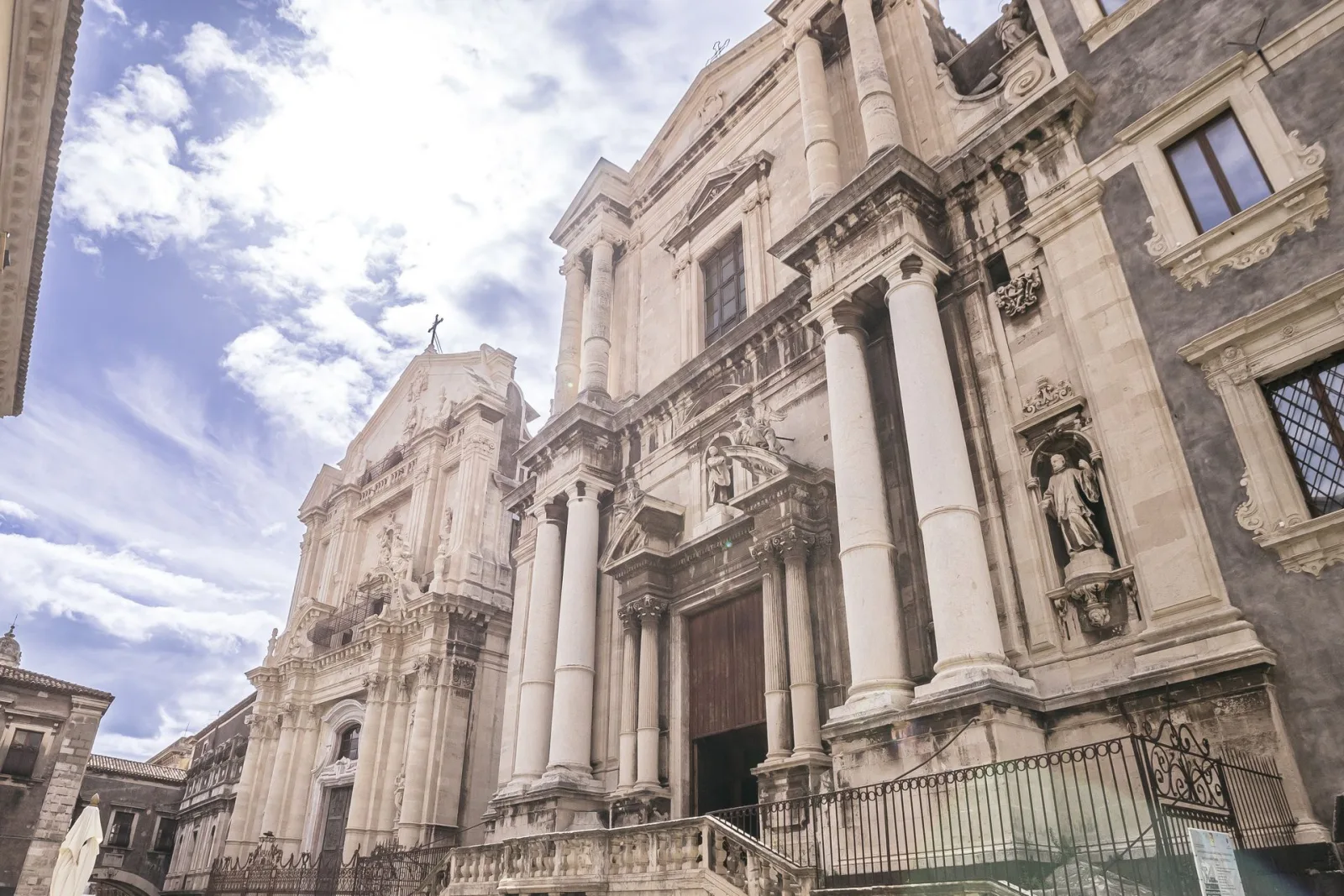
Come early, before the day warms up, and walk it slowly. The arch of San Benedetto spans the street at its southern end, and beyond it the churches come one after another: San Benedetto with its staircase, San Francesco Borgia, the old Jesuit College with its cloister, and San Giuliano with its curved façade. It is short, quiet and almost entirely Baroque.
Day one, late morning: Piazza Duomo and the fish market
From Via Crociferi it is a few minutes downhill to Piazza Duomo. In the middle stands the Elephant Fountain, the city’s symbol: a lava-stone elephant, known locally as u Liotru, carrying an Egyptian obelisk on its back. Giovanni Battista Vaccarini set it up in the 1730s. Behind it is the cathedral of Sant’Agata, Catania’s patron saint.
Just off the square, by Porta Uzeda, is La Pescheria, the fish market. It is a morning thing: it runs Monday to Saturday and is at its loudest and best before the stalls start closing towards midday. Swordfish, tuna, anchovies and sea urchins, sold at full voice. You do not have to buy anything; just walk through and listen.
Go early. The market winds down from late morning and does not open on Sundays.
Day one, afternoon and evening: Via Etnea
Via Etnea runs north from Piazza Duomo, straight as a ruler, and on a clear day Etna sits at the far end of it. It is Catania’s main street for shops, cafés and the evening walk.
Further up, the Villa Bellini gardens are the place for some shade. On the way you pass Piazza Stesicoro, where part of the Roman amphitheatre lies open below street level. Our Manzoni House and Civico 18 are close by, on Via Alessandro Manzoni.
Day two, morning: the Roman Theatre
On Via Vittorio Emanuele II, hidden behind ordinary house fronts, is the Roman Theatre. Houses were built right over and into it over the centuries, and walking in from the street is a real surprise. Its smaller neighbour, the Odeon, sits beside it.
Give it an hour. Check the opening times before you go, as they change with the season.
Day two, afternoon: Ursino Castle
A short walk south-west brings you to Ursino Castle, built for Frederick II in the thirteenth century. It once stood by the sea. The lava of 1669 flowed around it and the coastline moved away, so today it stands inland. Inside is the city’s civic museum.
From the castle you are back in the old streets within minutes. Finish wherever the evening takes you; in Catania, that is rarely far.
If you have a third day
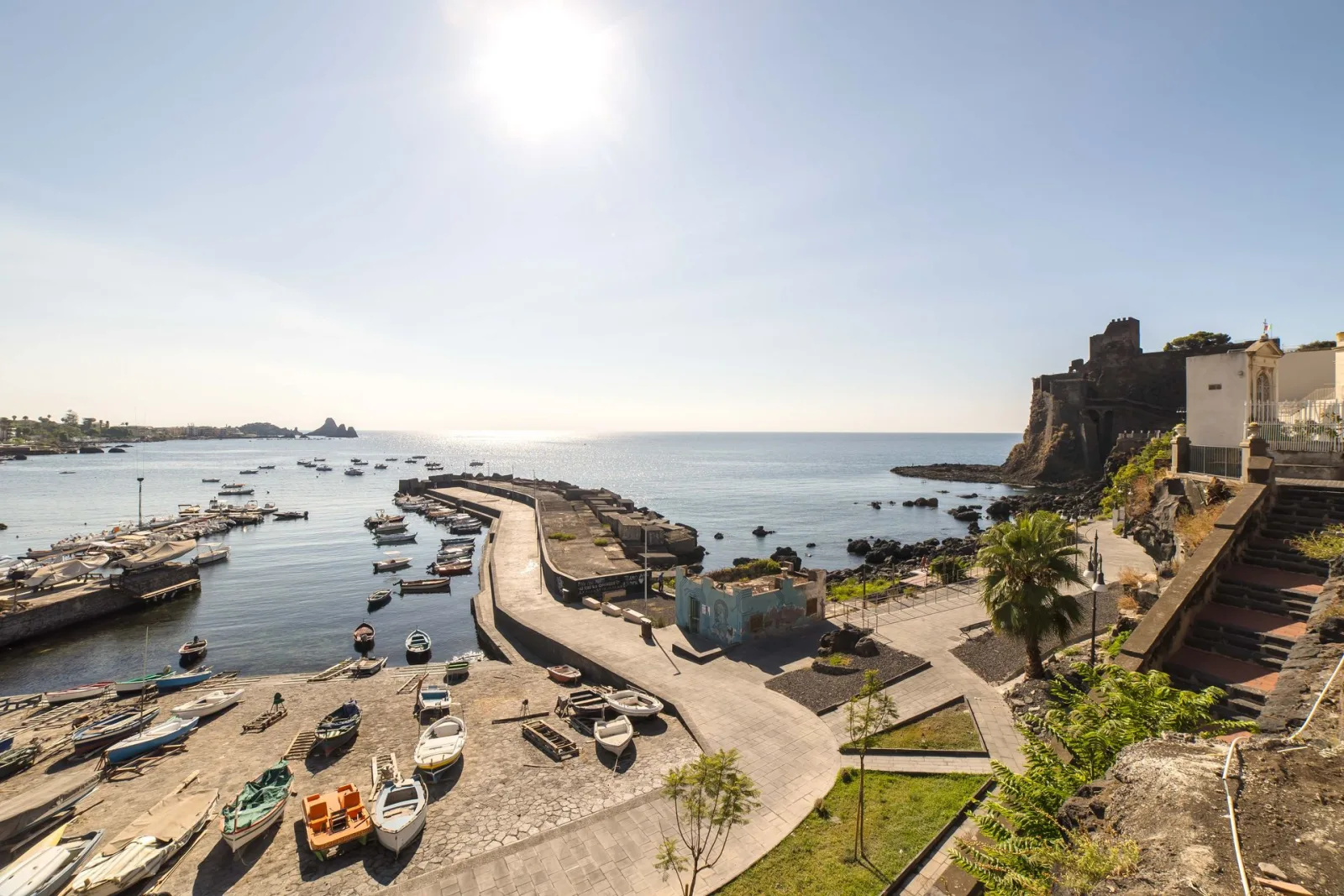
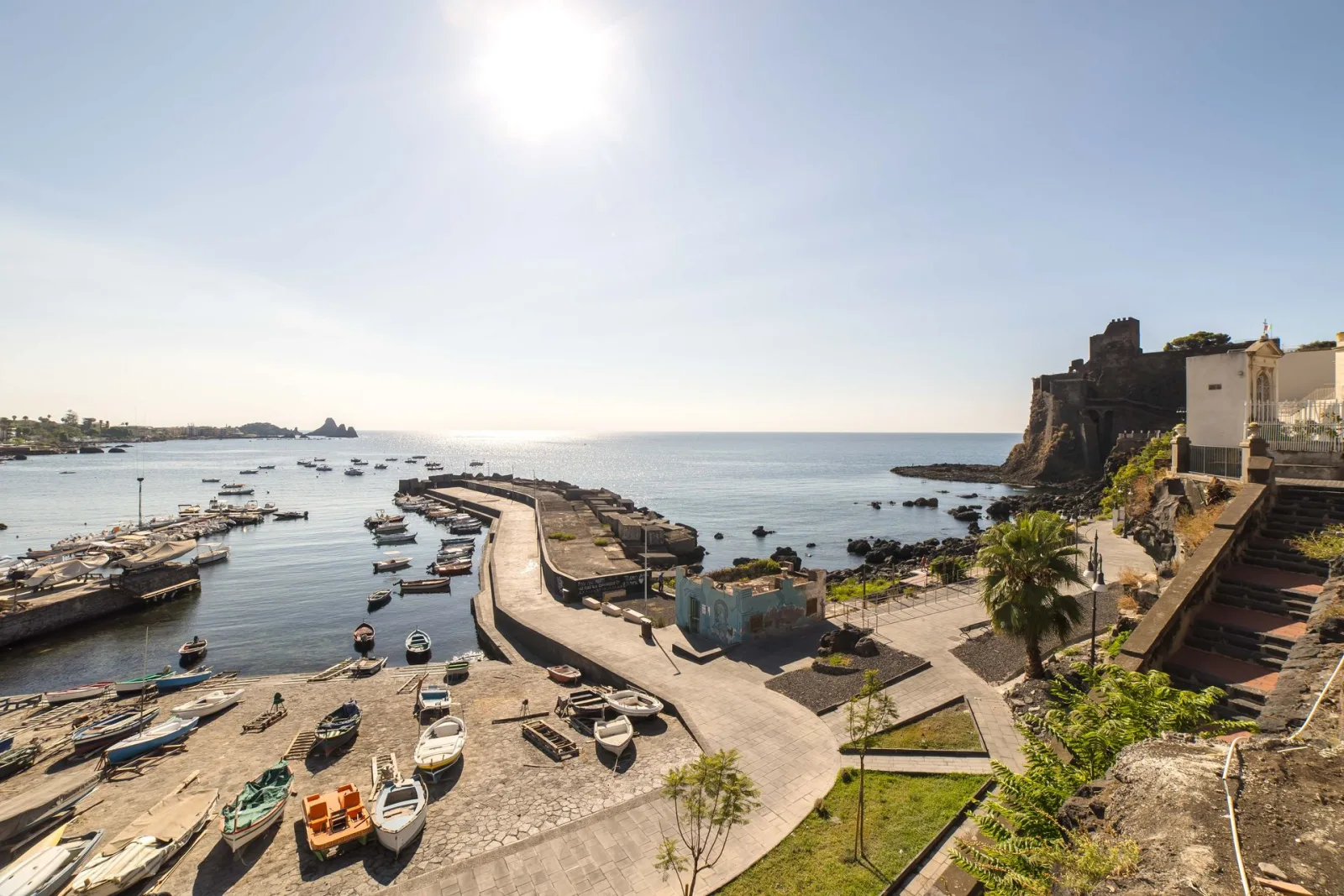
Catania is a good base for going further. Etna is close enough for a day, and we can put you in touch with the guides we trust: see our Etna excursions. If you would rather have the sea, the fishing villages of Aci Castello and Santa Maria la Scala are a short drive up the coast.
Every stay with us comes with a personalised itinerary built around how you like to travel, so tell us what you enjoy and we will fill in the rest.
Where to stay

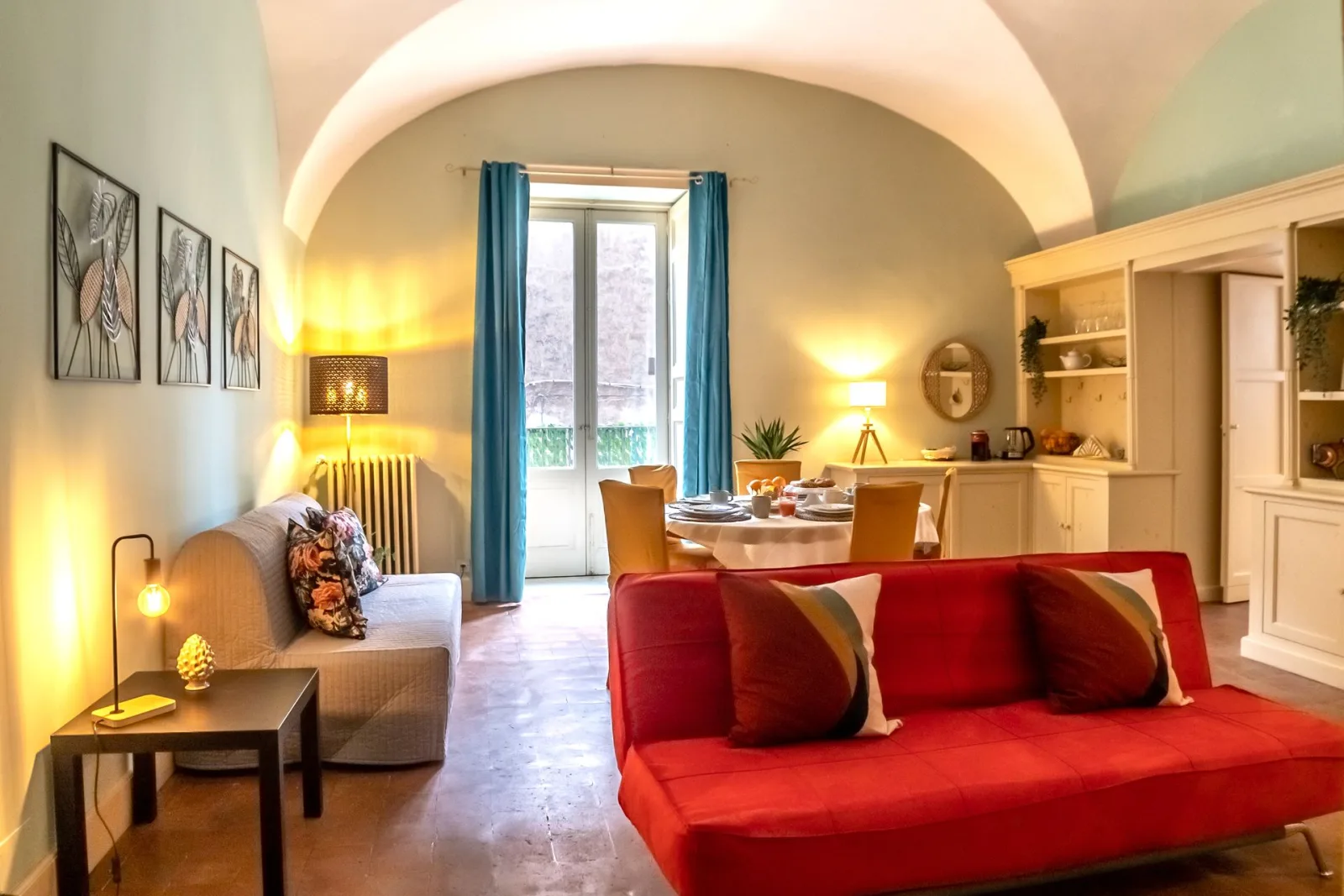
For two days on foot, stay in the centre. Sikelia Palace puts you on Via Crociferi itself, a few minutes’ walk from Piazza Duomo, and the Manzoni apartments are near Piazza Stesicoro and Via Etnea. See all our homes in Catania, or check availability.
Frequently asked questions
Is two days enough for Catania?
Two days is enough to see the historic centre properly: Via Crociferi, Piazza Duomo, the fish market, Via Etnea, the Roman Theatre and Ursino Castle are all within walking distance of each other.
When is the Catania fish market open?
La Pescheria runs in the morning, Monday to Saturday, and is closed on Sundays. Go early: the stalls start closing towards midday.
Can you walk everywhere in Catania’s old town?
Yes. The main sights sit within a short walk of Piazza Duomo. Sikelia Palace on Via Crociferi is a few minutes from the square on foot.
Where should I stay to explore Catania on foot?
Stay in the historic centre. Our homes on Via Crociferi and on Via Alessandro Manzoni, near Piazza Stesicoro, put the old town on your doorstep.
Your home, away from home
Baroque apartments in Catania, flats on the sea at Aci Castello, a villa on Etna and pool villas near Noto.